When triple-digit Texas summer temperatures test your cooling equipment, reliable HVAC in Austin requires precise thermodynamic calculations and prompt technical response. Modern residential climate systems must handle prolonged thermal saturation while maintaining indoor humidity levels below fifty percent across demanding microclimates.
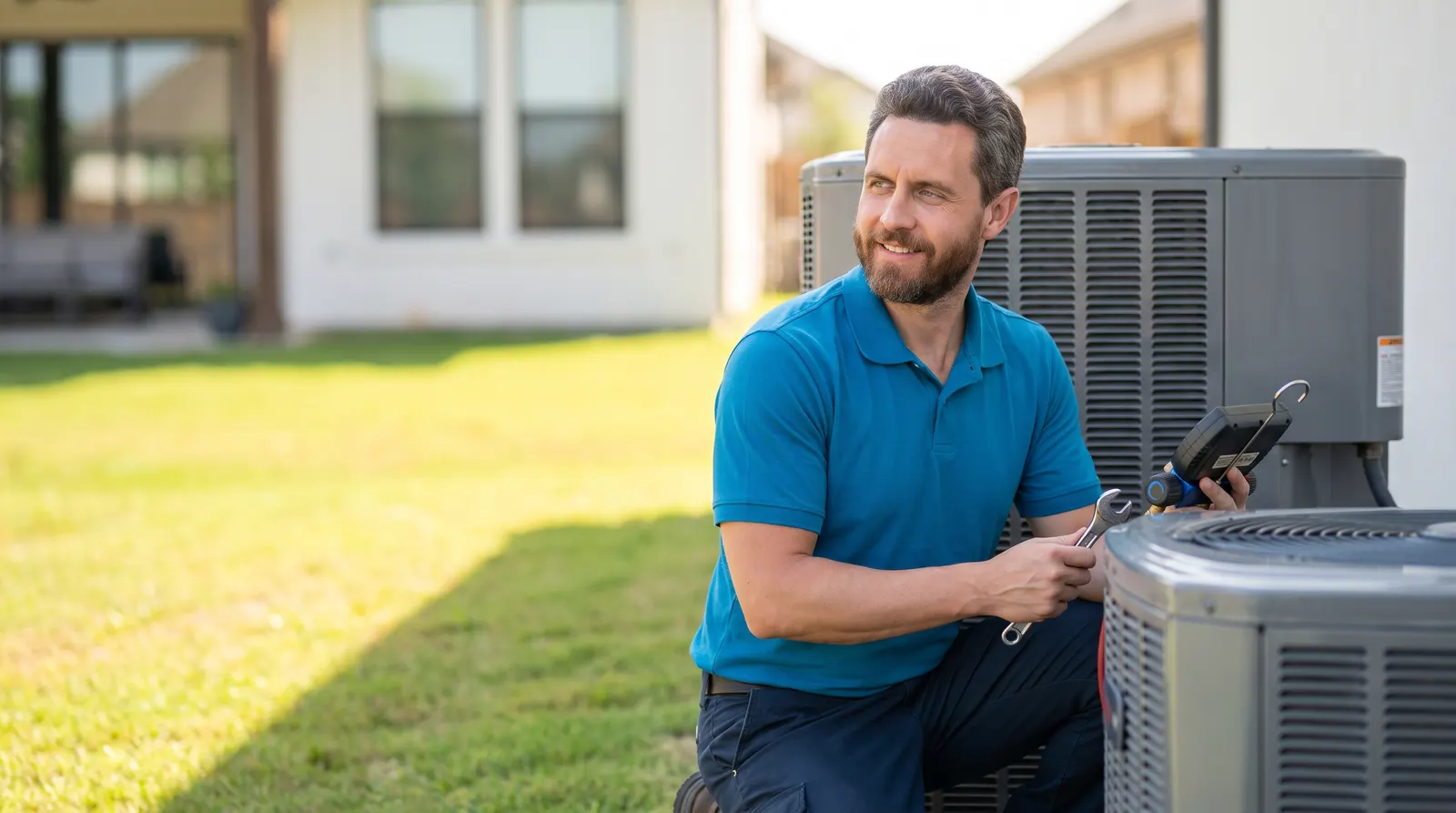
An HVAC company in Austin is a specialized mechanical contractor providing heating, ventilation, and air conditioning system diagnostics, installations, and precision load management across Travis County residential properties.
Every service reflects the same meticulous attention to detail — whether it's a single job or a larger hvac project across Austin.
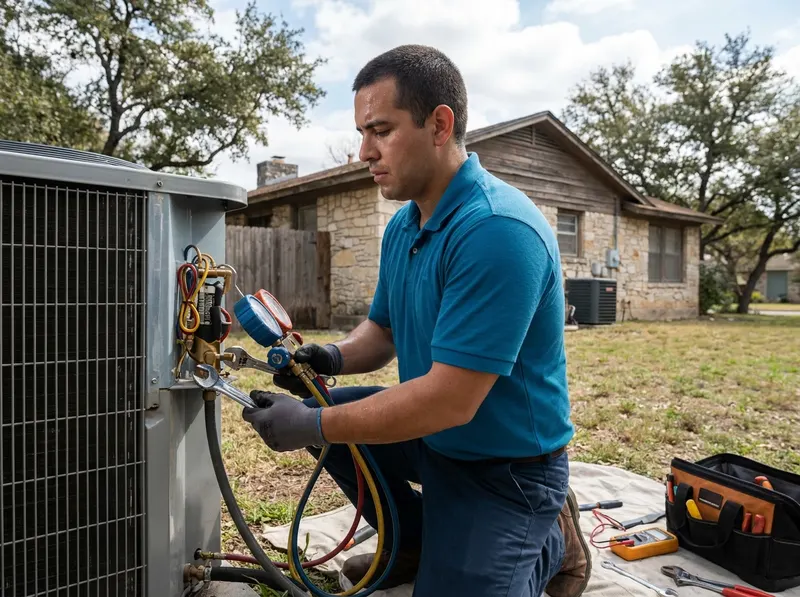
Central air conditioning repair restores cooling performance to systems struggling under prolonged Central Texas heatwaves. Technicians utilize digital manifold gauges, megohmmeters, and thermal imaging to isolate electrical and mechanical breakdowns accurately. Diagnostic workflows inspect dual run capacitors, heavy-duty contactors, hard-start kits, ECM blower assemblies, and thermal expansion valves (TXV). When an outdoor condensing unit fails to start or continuously trips the dedicated 240-volt double-pole breaker, field technicians test compressor motor windings for ground faults, open circuits, and turn-to-turn insulation degradation. System evaluations check crankcase heaters, fan motor bearings, and high-pressure safety cut-out switches. Refrigerant circuit assessments detect physical micro-fractures along copper suction lines, service valves, and aluminum evaporator fins. Technicians perform electronic leak detection, nitrogen pressure decay tests, and vacuum decay verifications down to 500 microns before recharging systems with virgin R-410A or R-454B refrigerant to manufacturer specification subcooling and superheat targets.
View details →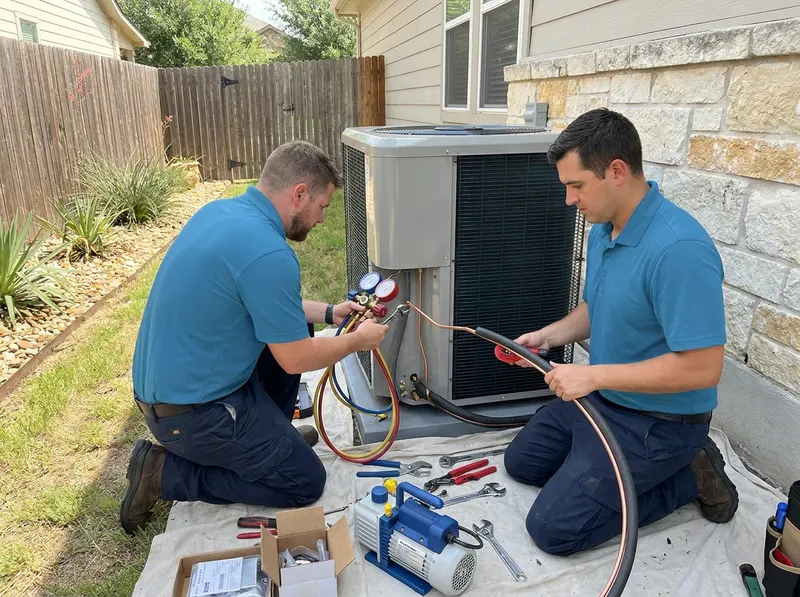
High-efficiency heat pump installation provides Austin properties with an all-electric heating and cooling system engineered to manage seasonal extremes. Modern variable-capacity inverter heat pumps modulate compressor output between twenty-five and one hundred percent capacity, matching real-time thermal gains without the massive energy spikes associated with traditional single-stage compressors. Every heat pump design begins with an ACCA Manual J residential load calculation and Manual S equipment selection, ensuring the cooling tonnage accurately matches the structural square footage, window solar heat gain coefficients (SHGC), ceiling insulation R-values, and building orientation. Technicians install robust outdoor condenser pads, anti-vibration isolation mounts, bi-flow liquid line filter driers, and multi-conductor communication wiring between the indoor air handler and outdoor inverter. Installations incorporate auxiliary electric heat strips with staging relays for emergency backup heating during sudden Arctic cold fronts, delivering steady year-round indoor temperatures and maximizing Austin Energy rebate qualifications.
View details →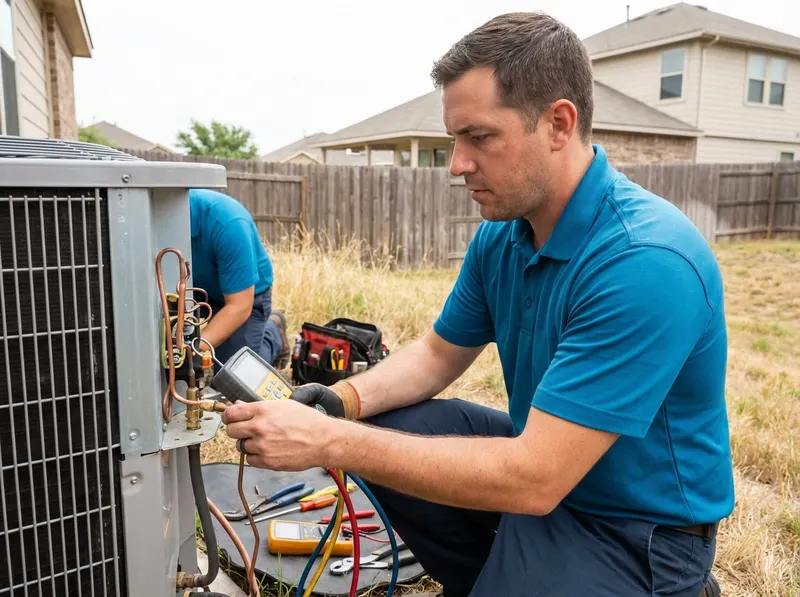
Precision HVAC system maintenance delivers a structured twenty-one-point mechanical and thermodynamic inspection to prevent catastrophic mid-summer failures and maintain peak energy efficiency. Field technicians chemically clean outdoor condenser coils using low-pressure alkaline foaming solutions, removing embedded limestone dust, organic debris, and heavy tree pollen without bending delicate aluminum coil fins. Technicians record compressor running amperage, measure starting capacitor microfarad capacitance against rated tolerances, and inspect electrical contact surfaces for pitting and carbon buildup. The indoor air handler inspection evaluates blower wheel cleanliness, static pressure drops across high-MERV air filters, evaporator coil delta-T temperature splits (targeting a sixteen to twenty-degree differential), and auxiliary heat strip staging. Maintenance visits include flushing condensate drain pans, clearing primary and secondary drain lines with pressurized nitrogen, installing algae-inhibiting tablets, and testing float safety switches to protect ceilings from catastrophic water overflow.
View details →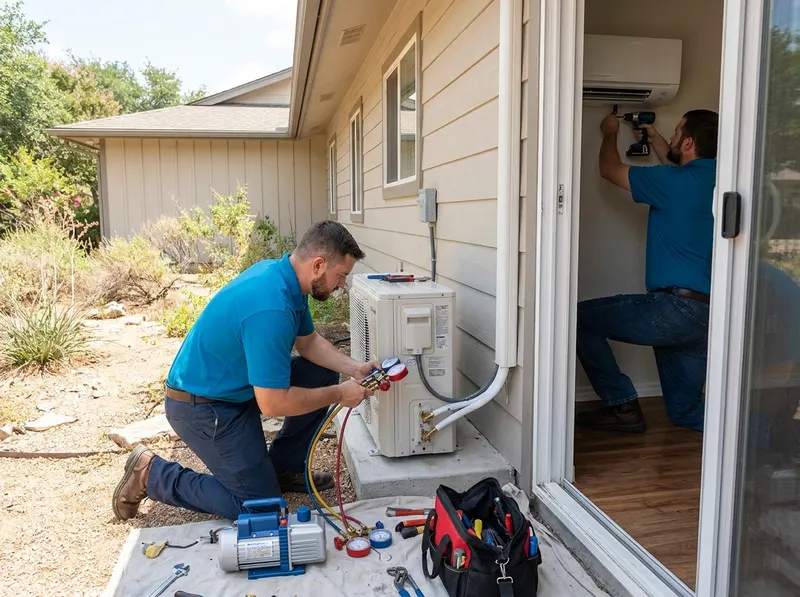
Ductless mini-split systems offer zoned cooling and heating solutions for Austin properties with architectural constraints, room additions, detached workshops, historical properties, or converted garage spaces. These multi-split heat pump configurations link a single compact outdoor inverter unit to multiple indoor wall-mounted, floor-mounted, or ceiling-cassette air handlers via slender, insulated refrigerant line sets. Each indoor zone operates independently via a dedicated remote or smart wall thermostat, allowing occupants to adjust temperatures in occupied rooms without expending energy to cool unoccupied spaces. Technicians core drill small three-inch exterior wall penetrations, run dedicated 14/4 shielded communication cables, mount sturdy wall brackets, and assemble gravity-assisted condensate drain tubing with integrated secondary safety check valves. Ductless systems achieve efficiency ratings up to 28 SEER2, providing quiet mechanical operation down to nineteen decibels and superior multi-room dehumidification.
View details →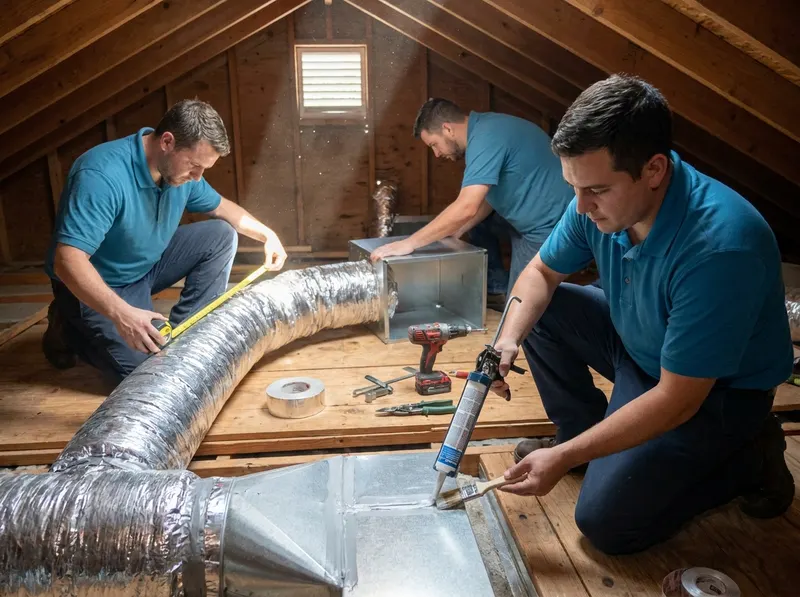
Air duct sealing and replacement optimizes conditioned airflow distribution, lowers indoor dust levels, and eliminates hot, stagnant rooms caused by deteriorated attic ductwork. In Austin attics where summer temperatures regularly exceed 130 degrees Fahrenheit, degraded mastic tape, disconnected branch flex ducts, and collapsed inner duct liners draw superheated attic air directly into the HVAC return stream. Technicians conduct static pressure testing, duct leakage inspections, and thermal camera imaging to locate distribution losses. Restoration services include re-supporting sagging duct runs with wide poly strapping, sealing register boots to ceiling sheetrock with water-based mastic and fiberglass mesh, replacing degraded flex ducts with R-8 insulated ducting, and installing manual balancing dampers at supply plenums. Properly balanced and sealed duct networks lower compressor run times, improve air filtration, and maintain consistent static pressure within manufacturer parameters.
View details →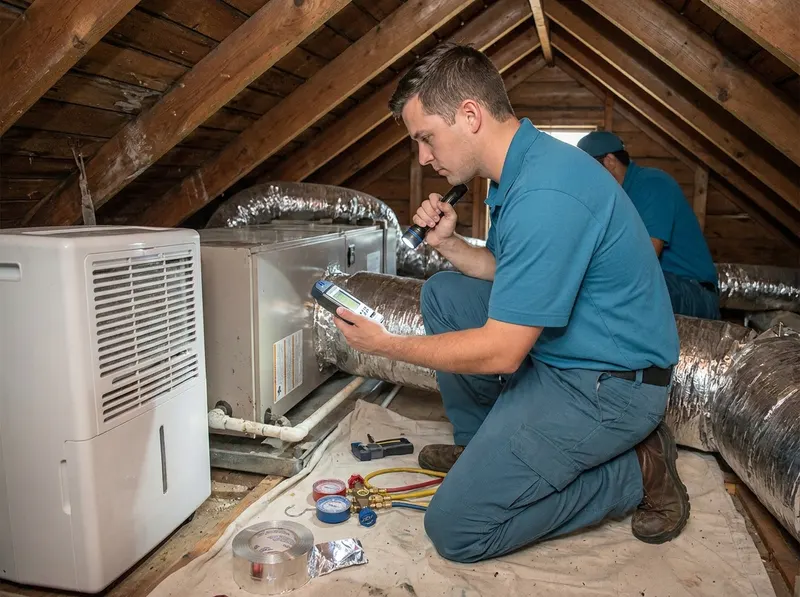
Indoor air quality and whole-home dehumidification systems address elevated humidity, airborne mold spores, and dense Central Texas pollen counts. In energy-efficient or tightly sealed homes, low-load variable cooling systems can leave indoor humidity levels hovering above sixty percent, creating sticky living conditions and promoting microbial growth inside duct liners. Installing dedicated whole-home dehumidifiers directly into the central return plenum allows independent moisture extraction up to ninety-eight pints per day without overcooling the home. Air quality packages integrate commercial-grade MERV 13 to MERV 16 media air cleaners, germicidal UV-C light arrays mounted downstream of the indoor evaporator coil, and active bi-polar ionization units. These integrated systems eliminate fine particulate matter, neutralize pet dander and volatile organic compounds (VOCs), and protect internal HVAC components from biological fouling.
View details →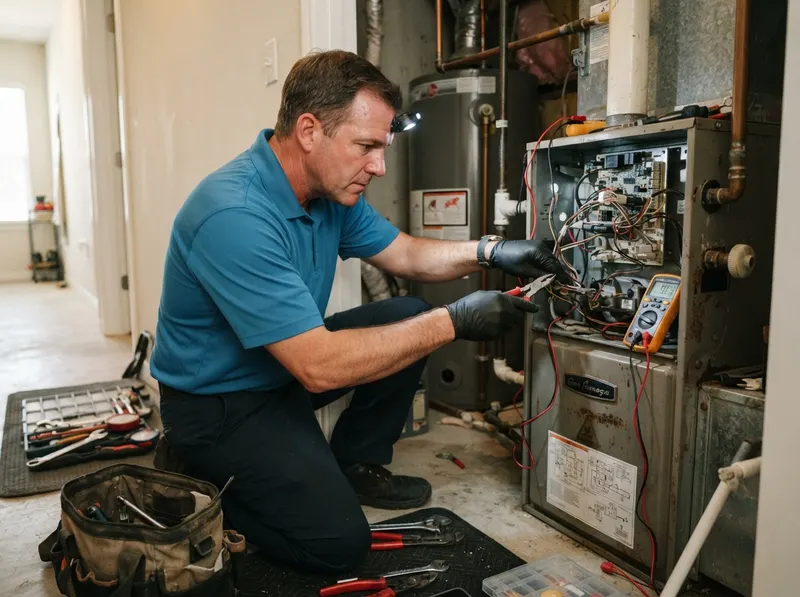
Emergency heating repair restores residential comfort during sudden Central Texas freezes when sub-freezing temperatures stress dual-fuel systems, standard heat pumps, and electric air handlers. When heating systems fail to engage, technicians inspect ignition control boards, multi-stage electric heat contactors, sequencers, safety limit switches, and defrost control logic modules on outdoor heat pumps. Defrost cycle diagnostics ensure reversing valves shift smoothly and outdoor sensor thermistors correctly trigger automatic coil de-icing cycles without locking the compressor into safety lockout mode. On electric furnace systems, technicians test high-limit thermal fuses, verify heating element continuity, and replace compromised 24-volt transformer relays. Heating diagnostic technicians arrive equipped with universal ignitors, transformers, safety limit cutoffs, and contactors to resolve heating failures safely and quickly across Travis County.
View details →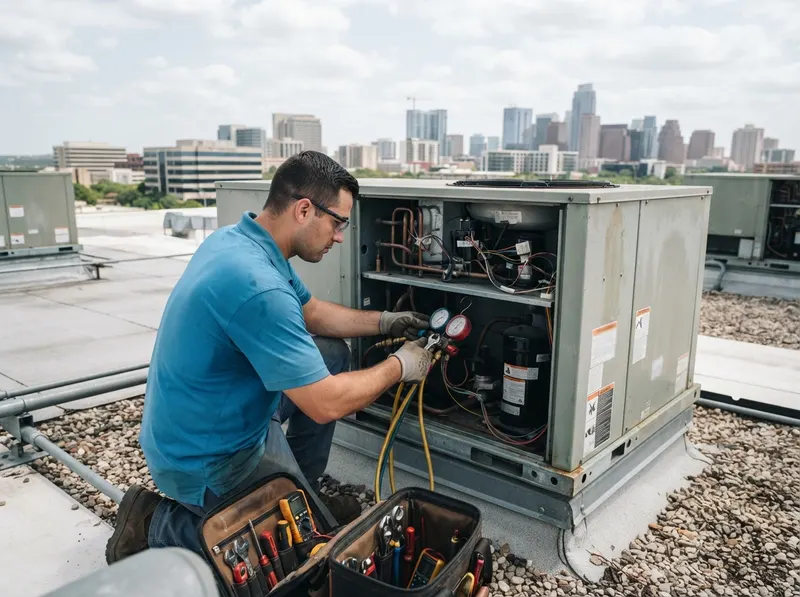
Commercial HVAC rooftop unit service delivers diagnostics, scheduled preventative maintenance, and mechanical replacements for packaged rooftop units (RTUs), split commercial heat pumps, and make-up air systems across Travis County light commercial properties. Commercial technicians service belt-driven blower systems, replace worn pulleys, align drive belts, inspect economizer dampers, test motorized actuators, and clean thick multi-row commercial condenser coils. Electrical diagnostics encompass three-phase voltage balance testing, phase monitor verifications, contactor replacements, and variable frequency drive (VFD) troubleshooting. Preventative commercial contracts include detailed dynamic static pressure logging, economizer enthalpy sensor calibration, refrigerant circuit leak screening, and automated economizer damper testing to ensure facilities comply with municipal ventilation codes while maintaining controlled operational energy overhead.
View details →An HVAC company in Austin is a specialized mechanical contractor providing heating, ventilation, and air conditioning system diagnostics, installations, and precision load management across Travis County residential properties.
You get a firm, itemized quote for your hvac before any work begins — no surprises, no pressure.
Careful prep, tidy work, and a full cleanup when we are done. We treat your home and belongings like our own.
The same trusted, background-checked team from the first call to the final check.
If you want rapid relief from a sudden mechanical failure during extreme triple-digit weather, choose targeted component repair. A precision diagnostic evaluation can isolate electrical faults such as failed dual run capacitors, pitted magnetic contactors, or worn condenser fan motors, restoring active cooling without requiring premature equipment replacement. If your current cooling unit operates on phased-out R-22 refrigerant, has exceeded a twelve-year operational lifespan, or presents a fractured compressor winding or compromised evaporator coil, choose a high-efficiency variable-capacity system replacement. The trade-off is an upfront capital expenditure ranging from $6,800 to $15,800 for an engineered inverter heat pump versus compounding monthly utility bills and recurring component repair expenses on a degraded mechanical platform. If your property features localized hot zones, non-ducted attic additions, or historical framing in neighborhoods like Hyde Park or Tarrytown, choose a multi-zone ductless mini-split system. Ductless configurations deliver targeted thermal regulation directly to individual living areas without the static pressure drops and twenty to thirty percent thermal losses common in aging attic duct runs. If your home has an intact central duct network and requires uniform climate moderation across all rooms, choose a centralized multi-stage or variable-speed central split system. The trade-off is higher structural modification and duct restoration requirements for central air systems compared to the visible wall-mounted aesthetic profile and dedicated electrical disconnect requirements of ductless wall heads. If your main priority is lowering utility bills while improving indoor comfort in humid summer periods, choose an inverter-driven variable-speed heat pump paired with whole-home dehumidification. Variable-speed units run extended low-capacity cycles that continuously extract moisture from indoor air, maintaining relative indoor humidity between forty-five and fifty percent. If your primary constraint is immediate project budget minimization, choose a standard single-stage 14.3 to 15.2 SEER2 cooling platform. The trade-off is higher electrical consumption during peak afternoon Austin Energy billing periods, greater operational sound levels, and more frequent temperature swings across multi-story floor plans. Every homeowner can text a photo of their equipment data plate to (737) 385-7003 to receive initial technical guidance before an on-site visit.
Every project gets a firm, written price after a free on-site visit. Ranges below for orientation.
Tell us about your hvac job and we'll send a clear, written quote — usually the same day. Or just call and talk to a real Austin pro.
(737) 385-7003
Austin homes experience exceptional mechanical stress driven by sustained triple-digit summer temperatures along the Balcones Fault line combined with sudden winter cold snaps from incoming northern fronts. In older neighborhoods like Hyde Park, Tarrytown, and Bouldin Creek, historic pier-and-beam foundations and compact attic spaces require creative equipment configurations, low-profile horizontal air handlers, and specialized duct routing to prevent severe static pressure restrictions. Conversely, expansive two-story suburban homes in master-planned communities like Circle C Ranch, Avery Ranch, and Steiner Ranch frequently suffer from severe upstairs thermal stratification, requiring dual-zone modulating dampers or supplemental variable-speed heat pumps to equalize vertical temperatures. Central Texas mechanical equipment must also withstand heavy airborne particulate loads. Dense seasonal blooms of Ashe juniper (mountain cedar) throughout winter, combined with spring live oak pollen and limestone dust blown along MoPac Expressway (Loop 1) and Interstate 35, rapidly clog outdoor condenser coils and indoor filtration media. In close proximity to Lady Bird Lake and Barton Springs Pool, elevated baseline ambient humidity levels place additional latent cooling burdens on residential compressors, requiring extended dehumidification cycles to prevent moisture buildup inside attic ducting. Mechanical installations across Travis County must adhere strictly to City of Austin Energy Code amendments, which mandate rigorous duct leakage testing thresholds below four percent, documented Manual J load calculations, and compliant equipment disconnect locations.
Free estimates for Austin & the surrounding area.
 Platinum Comfort HVAC Systems